If you've been comparing Chatham Borough to other towns on your list, you've probably already hit the problem: three different portals, three different numbers, and none of them agree on what a home here actually costs. Is it $1.1 million? $1.4 million? Something in between? The honest answer is that the number you're looking at was probably never built to answer your question in the first place.
Here's the friction that catches buyers off guard when they finally sit down to write an offer in the Borough: the "Chatham median" almost everyone quotes online blends two separate towns into one number, and even when you strip that blend out, the median itself is hiding the more useful story about what's actually happening to sale prices right now. Buyers who anchor an escalation strategy to that blended number are working from the wrong map before they've toured a single house.
The Number That's Already Wrong By The Time You See It
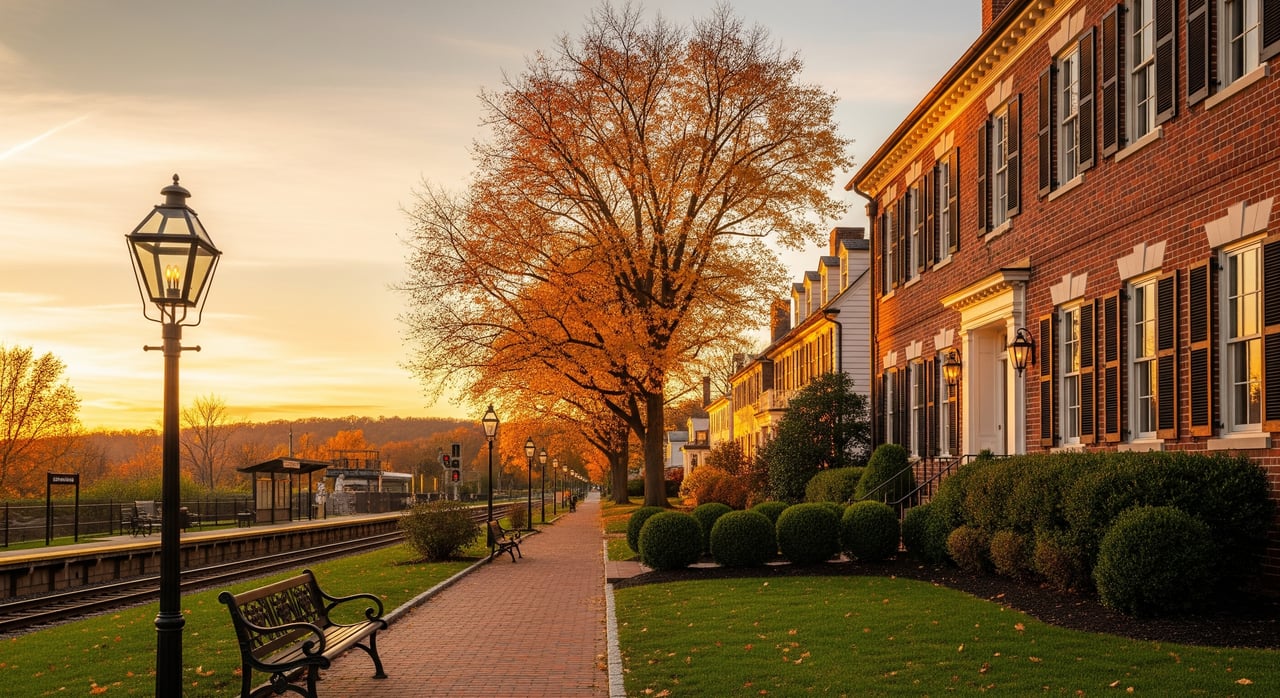
Chatham Borough and Chatham Township share a ZIP code, a library, and the School District of the Chathams. They do not share a government, a tax roll, or a housing stock. The Borough is the compact, walkable half built around Main Street and the train station. The Township is roughly four times the land area, more wooded, with larger lots stretching toward the Great Swamp. That geography drives almost everything else, including price.
As of May 2026, trailing twelve-month data put the Borough's median sale price near $1.24 million and the Township's near $1.69 million, a gap of roughly $450,000. Average a market like that into one town-wide figure and you get a number that describes neither half accurately.
The blend isn't even the biggest distortion. Chatham's combined monthly sales volume is small enough that a single luxury closing can swing the reported number by double digits. In March 2026, one portal reported a Chatham median of $1.2 million, up 51 percent year over year, on the strength of eight recorded sales that month. Eight sales. That is not a market that doubled in twelve months. That is a small sample meeting a heavy comparable, and it is the reason you can pull up three portals today and get three defensible, non-contradictory answers to the same question.
The Average That's Quietly Passing The Township
Here's where it gets genuinely useful for someone deciding between the two towns. The median says the Township costs more, and on a pure median basis, it still does. But look at what buyers have actually been paying this year rather than the midpoint of all closings, and a different pattern shows up. Year-to-date data through May 2026 put the Borough's average sale price at roughly $1.54 million against the Township's roughly $1.48 million.
Read that against the median gap and it looks like a contradiction. It isn't. It's evidence of something the median can't show you: how hard buyers are actually competing for what's available in each town, right now, at the top of the distribution.
| Metric (as of May 2026) | Chatham Borough | Chatham Township |
|---|---|---|
| Trailing 12-month median sale price | ~$1.24M | ~$1.69M |
| 2026 YTD average sale price (through May) | ~$1.54M | ~$1.48M |
| List-to-sale ratio (2026 YTD through May) | ~112.5% | ~106.7% |
The Borough's median stays lower because its underlying housing stock skews smaller and older. But its list-to-sale ratio, the actual percentage of asking price that competitive buyers are paying, has been running well ahead of the Township's, close to 112.5 percent against roughly 106.7 percent through the same period. That gap in bidding intensity is strong enough to pull the average dollar amount changing hands in the Borough past the more spacious, higher-median Township. The Borough isn't winning because it's cheap. It's winning because a well-prepared listing there draws a fight.
Why The Borough Fights Harder
The mechanism behind that number isn't mysterious once you separate the two towns. It's walkability to a train platform.
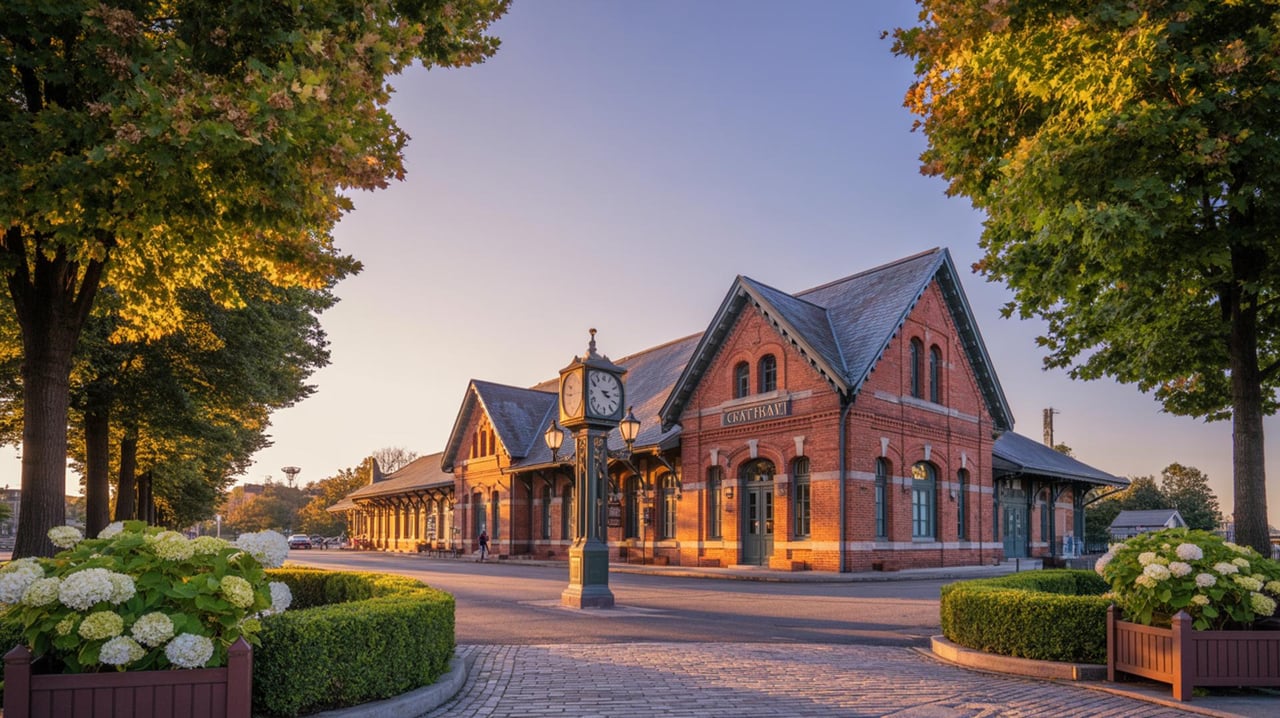
NJ Transit's Midtown Direct service runs from the Chatham station straight into New York Penn Station in roughly 45 minutes with no transfer, and that station sits inside the Borough, next to Main Street. Borough residents within a short walk treat it as an extension of their front door. Township residents typically drive five to ten minutes to reach it, or head to Summit for an express option, and they're doing that driving because permit parking at the Chatham station is reserved for Borough residents, with a waitlist that's often real. You can check the current permit process directly through the Borough's own parking page before you assume a Township home comes with the same commute as a Borough one.
That structural advantage, walk instead of drive, no permit waitlist to manage, is a big part of why thin Borough inventory turns into hard-fought bidding rather than a quiet close near asking. As of May 2026, standing inventory across Chatham had been running somewhere in the mid-teens to low thirties of active listings at any given time, a genuinely small pool for a town this in demand. Homes had been moving in roughly 9 to 14 days on market that spring, against a New Jersey statewide median closer to 50 days. When that few homes are available and a meaningful share of the buyer pool specifically wants the walk-to-train version, the ones that qualify get bid up hard.
The Comp Trap Hiding In The Data
There's a second distortion worth flagging before you build a pricing strategy: a chunk of what's actively listed across Chatham right now is new construction or a rebuild rather than an older resale, reflecting a teardown dynamic that's reshaping the top of the market in both towns. A new-construction closing is not a comparable for a 1950s Colonial with an addition, even if they're three doors apart and both technically "sold in the Borough this year." Folding those two categories together is exactly the kind of small-sample borrowing that makes a headline number swing further than the underlying market actually moved.
The same logic applies to property taxes. Both towns run an effective rate near 1.9 percent of true market value, with roughly two-thirds of that bill funding the shared School District of the Chathams. But that's a town-wide average, and the number that lands in your closing paperwork is whatever the assessor has on file for that specific address, not the average for Chatham as a whole. Read the tax line on the actual house, not the town's reputation for taxes.
What This Means For Your Offer
If you're comparing the Borough to other towns on your list, the practical takeaway isn't "the Borough is more expensive" or "the Borough is cheaper." It's that a general "Chatham goes for some percent over ask" heuristic will misprice you in either direction depending on which half of Chatham you're actually bidding in. Borough offers have been clearing closer to 112.5 percent of list on well-prepared homes. If you walk into a Borough bidding situation pricing your escalation cap off a blended, softer number, you are very likely to lose the house to someone who did their homework on the Borough specifically.
Score your comps against the right cohort: same municipality, similar vintage and condition, and don't let a new-construction sale down the street set your expectation for a resale. In a market this thin, that discipline is worth more than any single median you'll find online.
If you're weighing Chatham Borough against another town on your list and want a read on what a specific address or price band is actually doing right now, Karen Torrente can walk you through the current comps, not the blended headline. Let's Connect.
A Few Questions Worth Asking Before You Bid
Why do Zillow, Redfin, and Movoto all show different numbers for Chatham? They're measuring different things across a small sample. Some blend Borough and Township into one figure, some publish an algorithmic value estimate rather than actual closing prices, and Chatham's monthly closing count is small enough that a single high-end sale can move the reported number substantially.
Is Chatham Borough or Chatham Township more competitive right now? It depends on what you mean by competitive. The Township's median sale price runs higher because it holds most of the larger lots and newer construction. But the Borough's list-to-sale ratio has been running ahead of the Township's this year, which means Borough buyers are fighting harder, dollar for dollar, on the homes that do come up.
This article is general information, not legal, tax or financial advice. Consult a qualified professional about your situation.